
A DDoS-protected FiveM server costs between roughly 1,800 TL and 8,000 TL per month in Turkey, and the spread is driven by slot count, RAM and whether the protection actually works under fire. Most people searching for FiveM server pricing expect one number. In reality three separate line items decide what you pay: the machine, the Cfx.re licence, and what happens at the network edge. This guide separates all three with real figures — and shows you how to verify a "DDoS protected" claim before you hand over any money.
Your monthly bill breaks into three parts:
For a 48-slot roleplay server running a normal script set, a realistic all-in budget is 2,500–4,500 TL per month. Anything dramatically below that usually means one of two things: you are renting slots on a shared panel, or "protection" exists on paper but your IP gets null-routed the moment an attack lands — which takes your server offline exactly as the attacker intended.
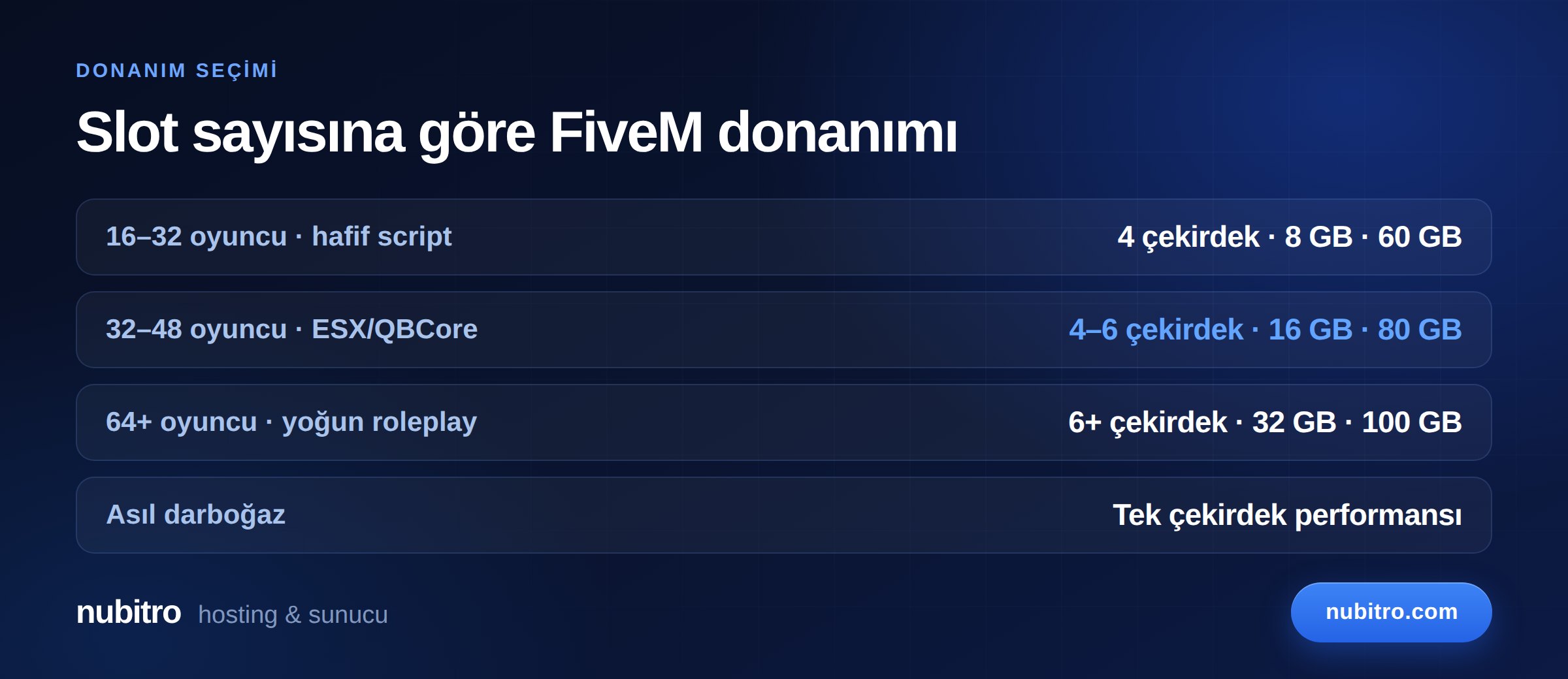
The real bottleneck in FiveM is not RAM, it is single-core performance. The server main thread runs on one core, so a 40-player server with 30 resources will perform worse on eight weak cores than on four strong ones. RAM still governs how many resources and how much map content you can hold:
Your framework choice moves these numbers too. We compared resource behaviour in detail in our ESX vs QBCore vs Qbox breakdown.
This is the line most first-time owners forget to budget. Slot limits come from Cfx.re, not from your hosting provider:
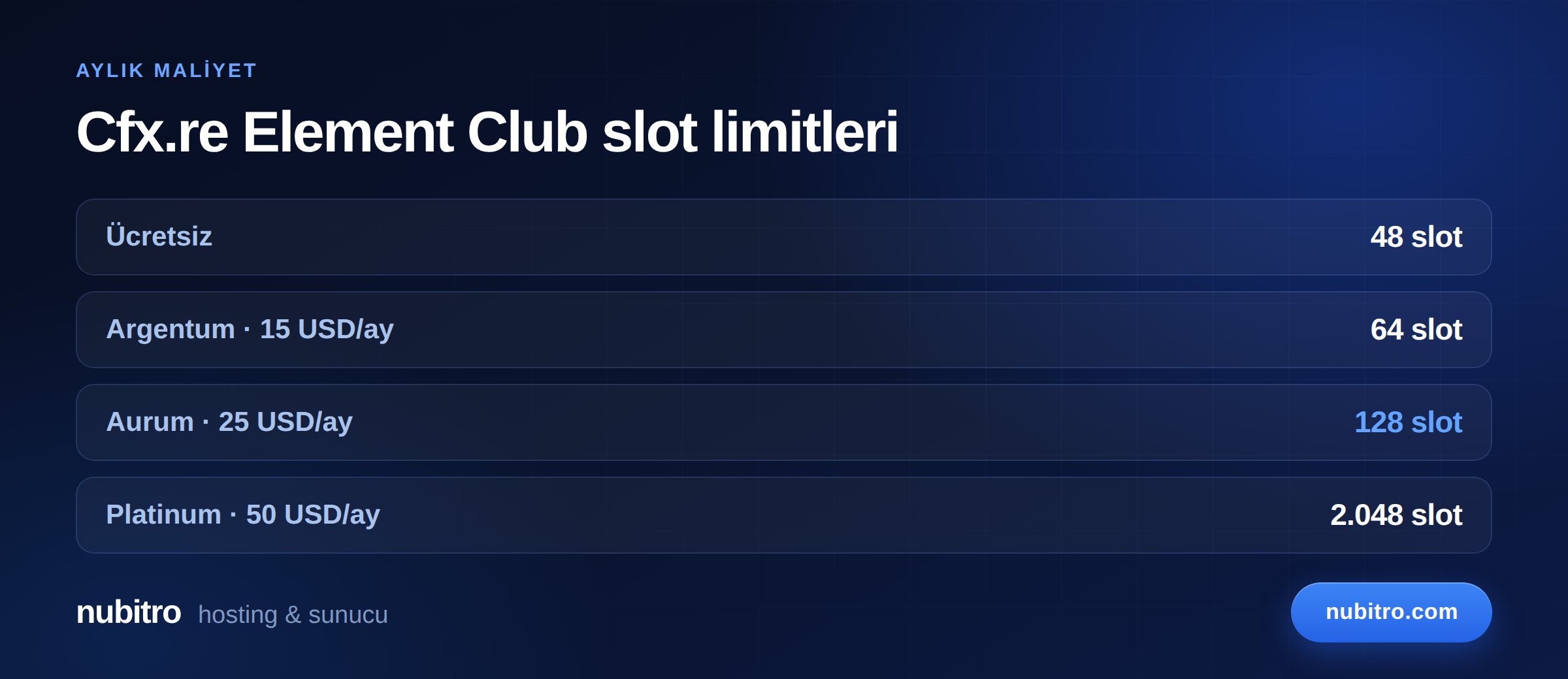
On the server side the limit is set by sv_maxClients. Per the official documentation the valid range is 1–2048, values of 32 and above require onesync enabled, and anything above 64 requires onesync on. So a host advertising "128 slots" cannot deliver them unless you also hold the matching Cfx.re subscription.
FiveM is one of the more exposed game platforms, and the reason is architectural: when a player connects, their packets travel straight to your IP. There is no HTTP proxy in front of it. We covered why in does Cloudflare protect game servers.
By default FiveM uses port 30120 over both TCP and UDP — gameplay traffic on UDP, the initial handshake on TCP — plus 40120 for txAdmin and optional voice ports. The target is public and cannot be hidden.
The scale is not theoretical. Cloudflare's H1 2026 report records 23.2 million network-layer DDoS attacks mitigated in six months, roughly 5,343 per hour, with 935 attacks above 1 Tbps and a 519% quarter-over-quarter jump between Q1 and Q2.
The most misleading number in hosting marketing is headline capacity. "200 Tbps protection" describes the scrubbing network a provider connects to — not bandwidth reserved for you. We unpacked how to read those figures in what DDoS protection capacity in Gbps really means.
Here is the number that matters more: in that same Cloudflare report, 96.62% of network-layer attacks stayed under 500 Mbps and 90.60% ended in under 10 minutes. The thing that kills your server is rarely a multi-terabit monster. It is a 300 Mbps UDP flood lasting four minutes, timed for peak hours. Stopping that takes protocol-aware filtering and rules that engage within seconds — not a big number on a landing page.
The classic symptom of bad protection is the null-route: your provider blackholes your IP, the attack traffic stops, and your server stays unreachable for 2–24 hours. That is the attacker's win condition, delivered by your host.
Knowing the attack types helps you read quotes properly. UDP floods against port 30120 are the most common — even a cheap booter service produces several Gbps. Query amplification abuses the server-list protocol with spoofed source IPs and turns your server into a weapon against someone else. SYN floods on the same port exhaust the connection table so new players cannot join. And fake join floods never look abnormal at the network layer at all — traffic is legitimate, your slots simply fill with nobody. The first three are your provider's job; the fourth is yours.
Ask these directly. If the answers are not specific, keep shopping:
Your host defends the network layer; the application layer is yours. These settings from the official Cfx.re documentation meaningfully reduce spoofing and fake-connection attempts:
sv_endpointPrivacy true — hides player IP addresses from public server reports, so a rogue staff member cannot harvest them.sv_authMinTrust — an integer from 1 to 5 measuring how resistant an identifier is to spoofing. The default is 1; raising it filters out throwaway accounts.sv_authMaxVariance — also 1 to 5, controlling how much identifiers may change between sessions. The default is 5; lowering it makes ban evasion harder.Building from scratch? Our FiveM server setup guide walks through every step, and the FiveM DDoS protection guide covers the hardening side in depth.
Panels selling cheap "FiveM slots" divide one physical machine across dozens of servers. It looks reasonable at launch and carries two problems: an attack on any neighbour affects you, and because single-core performance is shared, your resmon numbers drift once you pass 30 resources.
On your own VDS the resources are yours, the firewall rules are yours, and so is the IP. If you plan to exceed 20 concurrent players, the difference shows within the first month.
This is also where the forgotten costs live. Backups come first — a corrupted database or one bad staff command has ended communities that had no weekly snapshot. Then a domain and community site, a voice server, the paid scripts and MLO packs you will buy, and the extra disk you will need as the stream folder grows. Budgeting these on day one is what stops a server from closing in month three because "it does not pay for itself."
Billing period matters too. Annual terms typically save you about two months versus monthly — but do not commit on day one. Run a month, read your real resmon and occupancy numbers, then lock in the plan that fits.
Nubitro's FiveM plans run from Istanbul with 10 Gbps unmetered traffic and always-on DDoS filtering. Monthly pricing:
At checkout you choose the operating system, extra disk, additional port capacity and protection tier yourself. See current pricing and full specifications on the FiveM server plans page. If you are unsure which tier fits, send your expected player count and resource list to support — starting on the wrong plan and upgrading always costs more than starting on the right one.
Hardware runs 1,800–8,000 TL monthly. Add 15–50 USD for Cfx.re Element Club if you need more than 48 slots. A mid-size 48-slot roleplay server realistically lands at 2,500–4,500 TL all-in.
No. Baseline filtering belongs inside any game hosting plan. Only higher tiers, such as advanced professional mitigation, are reasonable as paid upgrades.
For most new roleplay servers, yes. Very few exceed 20–30 concurrent players in the first months. Start free, and move to Argentum or Aurum once occupancy consistently passes 80%.
If your players are in Turkey, yes. Istanbul typically delivers 20–40 ms lower ping than a European site, and in roleplay that gap is visible in vehicle synchronisation.
Mass disconnects, rising ping while resmon looks normal, and disappearing from the server list are the classics. The full checklist is in is your game server under DDoS attack.
You can, but moving the database, resources and player data takes real work. If you are targeting 20+ players, starting on your own server is less effort overall.
sv_endpointPrivacy, sv_authMinTrust and per-source rate limits are the half of the defence that belongs to you. Turkey (Türkçe)
 Worldwide (English)